
IMPERIAL ARSENAL — THERMAL WEAPONS
Fusion Lance
Sub-atomic thermal agitation focused through blessed engineering — the Emperor's purifying heat made manifest against armour and fortification alike.
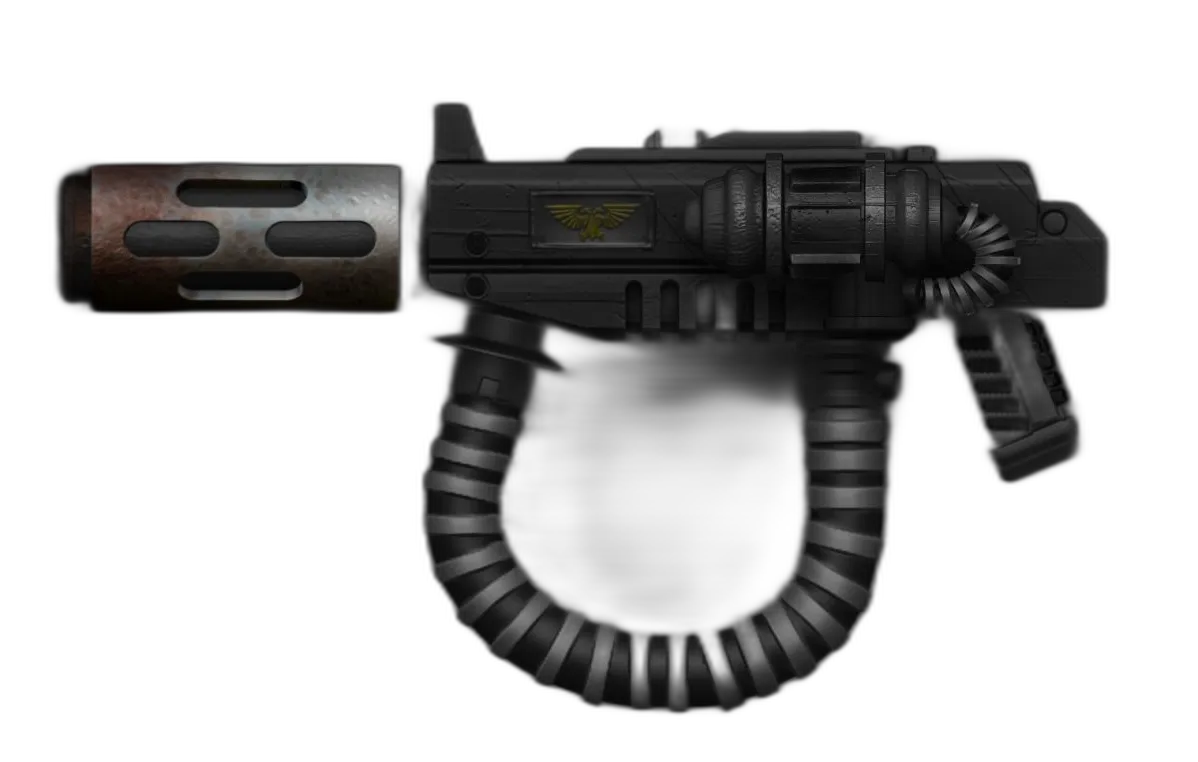
Tap a zone on the blade to explore
Melta Weapons — All Sections
Sub-Atomic Annihilation
Melta weapons stand as the Imperium's most devastating close-range anti-armour technology, instruments of war that reduce the mightiest fortifications and thickest vehicle hulls to superheated slag through the terrifying principle of sub-atomic agitation. These fusion weapons emit concentrated blasts of thermal energy that excite the molecular structure of their targets to the point of liquefaction, turning ceramite plate, adamantium bulkheads, and ferrocrete bunker walls into rivers of molten metal in fractions of a second. No other infantry-portable weapon in the Imperial arsenal can match the raw armour-penetrating power of a meltagun fired at close range, a capability that makes these weapons indispensable to every military force serving the Emperor. The warriors who bear melta weapons into battle accept a sacred covenant — they must close to terrifyingly short range against the most dangerous targets on the battlefield, trusting in their faith and their armour to survive long enough to deliver the killing shot. The operating principle behind all melta weapons relies upon pyrum-petrol fuel charges combined with pressurized sub-molecular thermal agitators that focus intense heat into tight beams of fusion energy. When a meltagun's trigger is depressed, the fuel charge ignites and passes through the thermal agitator core, producing a blast that can reach temperatures exceeding those found on the surface of stars. The beam itself is often invisible to the naked eye, manifesting only as a brief shimmer of superheated air before the target erupts in white-hot incandescence. At the point of impact, armour does not merely crack or shatter as it would under kinetic force — it liquefies, bubbles, and vaporizes as molecular bonds dissolve under the overwhelming thermal assault. The Departmento Munitorum classifies melta weapons under the designation "Thermal/Fusion," rating them among the most destructive infantry-portable armaments available to the forces of the Imperium. The devastating effectiveness of melta weapons increases dramatically at close range, a property that Imperial tacticians refer to as the fusion threshold. At approximately half their maximum effective range, the thermal beam achieves peak concentration before atmospheric dispersion begins to degrade its potency, and at this critical distance the sub-atomic agitation reaches an intensity that overwhelms even the most advanced heat-dispersal systems. This characteristic makes melta weapons uniquely terrifying — their operators must advance into the teeth of enemy fire, closing to distances where they can see the rivets on an enemy tank's hull before unleashing their weapon's full fury. The courage required to close to melta range against a battle tank whose weapons can obliterate a warrior at ten times that distance has earned melta gunners a fearsome reputation across every branch of the Imperium's military. Within the broader family of Imperial weaponry, melta weapons occupy a distinct tactical niche that no other weapon system can fill. Where Bolters provide the backbone of infantry combat and Las Weapons serve as the workhorse of the Astra Militarum, where Plasma Weapons deliver devastating mid-range firepower and Heavy Weapons provide sustained support fire, melta weapons excel at the singular task of destroying the hardest targets at the closest ranges. A single meltagun shot can core through the glacis plate of a Land Raider, breach the walls of a Chaos fortress, or reduce a Traitor Terminator to a puddle of molten ceramite and scorched flesh. This unmatched penetrating power comes at the cost of range and ammunition capacity — melta weapons carry limited fuel charges and their effective range is measured in metres rather than hundreds of metres. The Adeptus Mechanicus regards melta technology with particular reverence, for the fusion principles underlying these weapons represent some of the most sophisticated engineering preserved from the Dark Age Technology. Each melta weapon produced on the sacred Forge Worlds undergoes extensive blessing ceremonies that awaken its machine spirit and consecrate its thermal agitator core to the service of the Omnissiah and the Emperor. The pyrum-petrol fuel that feeds these weapons is itself a sacred substance, its manufacture a closely guarded secret of the Mechanicus that requires precise chemical formulation and ritual preparation. To waste a melta shot on an unworthy target is considered not merely tactically foolish but spiritually offensive — a squandering of the Omnissiah's gifts that dishonors the Tech Priests who labored to create each precious fuel canister. Imperial forces across every theatre of war maintain melta weapons as essential components of their arsenals, from the Adeptus Astartes who wield meltaguns as special weapons in tactical squads to the Astra Militarum veterans who carry them as their regiment's anti-armour specialists. The Adepta Sororitas deploy melta weapons extensively as part of their sacred doctrine of Cleansing Fire, their Dominion squads advancing with meltaguns blazing to reduce heretic fortifications to slag. Even the elite Custodian Guard of the Emperor's own household maintain melta weapons in their armories, testament to the universal recognition that no other personal weapon can match the fusion gun's ability to destroy armoured threats. The sound of a melta discharge — a roaring hiss followed by the tortured screaming of liquefying metal — has become one of the most feared sounds in the galaxy.From Dark Age Forges to the Era Indomitus
The origins of melta technology stretch back to the Dark Age Technology, when humanity's boundless ingenuity produced fusion-based thermal devices for industrial and mining purposes long before they were ever turned to the art of war. During that golden age of human achievement, thermal cutting tools could slice through asteroid rock, ship hulls, and planetary crust with precision that modern Tech Priests can only dream of replicating. The weaponization of fusion technology was an inevitable consequence of the conflicts that erupted between human colonies during the later stages of the Dark Age, as engineers adapted mining equipment into devastating weapons capable of melting through any defensive barrier their enemies could erect. These early melta weapons were crude compared to the refined patterns that would later emerge, yet they established the fundamental principle of sub-atomic thermal agitation that remains unchanged after twenty millennia. The Age Strife that followed the collapse of humanity's golden age threatened to destroy melta technology along with countless other marvels of the Dark Age, as forge-worlds burned and knowledge was lost across the galaxy. Yet the Standard Template Construct databases that survived this catastrophe contained fragmentary blueprints for fusion weapons, their sacred patterns preserved in data-cores scattered across worlds that would later become the domain of the Adeptus Mechanicus. The Mechanicum of Mars preserved some of the most complete melta weapon templates, though no single forge-world retained the full understanding of the technology's deepest principles. Variations in surviving STC data meant that different forge-worlds developed distinct patterns and local adaptations, a diversity that persists to the present day and explains why no two forge-worlds produce identical melta weapons. When the Emperor emerged from the unification of Terra and launched the Great Crusade to reunite humanity's scattered colonies, melta weapons were already part of the nascent Space Marine Legions' arsenal. The Legiones Astartes recognized the unique tactical value of fusion weapons — their ability to breach any fortification, destroy any vehicle, and eliminate any heavily armoured enemy at close range made them essential tools for a crusade that would encounter every conceivable form of resistance. Different Legions developed distinct preferences for melta deployment, with the Salamanders of the XVIII Legion becoming particularly renowned for their mastery of thermal and flame-based weapons. The Iron Hands deployed melta weapons extensively for anti-vehicle operations, while the Imperial Fists employed them as siege weapons to breach fortress walls that resisted conventional bombardment. The Horus Heresy saw melta weapons turned against the very Imperium they were created to defend, as Traitor Legions wielded fusion guns against loyalist forces in the bloodiest civil war humanity had ever known. During the Siege of Terra, meltaguns burned through the walls of the Imperial Palace itself, their sacred fury perverted to destruction rather than protection. Brother slew brother with weapons that should have been turned against xenos and heretics, the intimate close range of melta engagements making these duels particularly brutal and personal. The Battle of Calth saw melta weapons prove invaluable in the underground fighting that followed the Word Bearers' betrayal of the Ultramarines, as the confined tunnel environments perfectly suited weapons designed for close-range armour destruction. When the surviving loyalist Legions were reorganized into Chapters under the Codex Astartes, melta weapons were codified into specific tactical roles — assigned primarily to Assault squads, tactical squad special weapons, and Devastator squad heavy support platforms. The ten millennia following the Heresy saw melta weapons serve continuously across every warzone in the Imperium, their fundamental design preserved through the sacred conservatism of the Adeptus Mechanicus. Forge Worlds such as Mars, Ryza, and Stygies VIII maintained production of melta weapons through ages of strife and renewal, their foundries blessing each weapon with rituals that had remained unchanged since before the Heresy. Forge World Ryza gained particular renown for its thermal weapons technology, producing meltaguns of superior quality that were sought after by Adeptus Astartes Chapters and Astra Militarum regiments alike. Minor refinements in fuel efficiency, barrel cooling, and targeting systems were introduced over the millennia, yet the core principle of sub-atomic thermal agitation remained identical to the Dark Age originals. The Era Indomitus has brought renewed importance to melta weapons as the Imperium faces threats on every front following the opening of the Great Rift. The proliferation of Chaos armoured vehicles, Daemon Engines, and heavily armoured Heretic Astartes has made close-range thermal weapons more critical than ever before. Archmagos Belisarius Cawl's development of Primaris Space Marines included updated melta variants — the melta rifle carried by Eradicator squads extending the weapon family's lineage into a new era with improved range while maintaining devastating close-range thermal output. The Indomitus Crusade has consumed melta weapons and their precious pyrum-petrol fuel at rates that strain even the vast production capacity of the Forge Worlds, yet the Mechanicus continues to supply them knowing that without fusion weapons, the Imperium's warriors would lack their most reliable means of destroying the armoured threats that multiply with each passing year.Meltaguns
The standard Imperial meltagun is a rifle-sized weapon heavier and bulkier than a bolter, distinguished by its wide-bore barrel shrouded in heat dispersal vanes that radiate the tremendous thermal energy generated with each discharge. Its effective range extends to approximately twelve metres with reduced effectiveness beyond that distance, while the devastating fusion threshold concentrates within the first six metres where the sub-atomic agitation reaches peak intensity. Each meltagun carries a limited supply of pyrum-petrol fuel canisters that provide only a handful of shots, making every discharge a calculated decision that weighs the value of the target against the irreplaceable nature of each fuel charge. The weapon produces minimal recoil since its destructive energy is thermal rather than kinetic, yet the heat backwash from each shot is significant enough that operators without power armour must wear specialized thermal-resistant gear to avoid serious burns. In a standard Codex-compliant Adeptus Astartes tactical squad of ten Space Marines, one battle-brother may carry a meltagun as the squad's designated special weapon, serving as the anti-armour specialist whose fire can crack open threats that bolter rounds cannot penetrate. This Marine typically operates with deliberate tactical positioning, advancing through cover to close the distance to enemy vehicles and heavy infantry while his squad provides suppressive fire. The discipline required to hold fire until reaching optimal range — resisting the temptation to waste precious fuel at distances where the weapon is least effective — distinguishes veteran melta gunners from novices. Assault squads equipped with jump packs pair naturally with meltaguns, their mobility allowing them to close the gap to enemy armour rapidly, deliver devastating point-blank shots, and disengage before the enemy can respond. The combi-melta represents one of the most prized weapon configurations in Space Marine armories, integrating a single-shot meltagun component with a standard boltgun to provide officers and veteran Marines with versatile anti-armour capability without sacrificing their bolter's general-purpose firepower. Typically carried by squad sergeants, Captains, and veteran battle-brothers, combi-meltas are often ancient relics with individual names and long histories stretching back centuries or millennia. The single melta shot must be deployed with perfect timing and target selection, for once fired there is no second chance — the weapon reverts to a standard bolter until it can be reloaded by a Tech Priests in the Chapter's armorium. This scarcity transforms each combi-melta shot into a moment of supreme tactical judgment. The Astra Militarum issues meltaguns to special weapon squads and veteran squads, where they serve as the regiment's dedicated anti-armour capability at the infantry level. For unaugmented humans, wielding a meltagun presents challenges beyond those faced by Space Marines — the heat backwash alone can cause burns through standard-issue flak armour, the weapon's considerable weight makes it unwieldy in prolonged combat, and the psychological burden of closing to knife-fighting range with an enemy battle tank tests even the bravest soldiers. Guard meltagunners typically operate in pairs or small teams to maximize their chances of destroying a target before being overwhelmed, their doctrine emphasizing concealment and ambush tactics that bring them into range without exposing them to the enemy's full firepower. The Adepta Sororitas deploy meltaguns extensively as part of their sacred Cleansing Fire doctrine, their faith-driven close-assault approach pairing perfectly with the meltagun's short-range lethality. Dominion squads specialize in melta weapon deployment, often riding into battle aboard Immolator transports to deliver concentrated thermal firepower at point-blank range against heretic fortifications and armoured vehicles. The Sisters' willingness to advance fearlessly into the teeth of enemy fire, trusting absolutely in the Emperor's protection, makes them devastating melta weapon operators who strike with a conviction that unnerves even hardened enemies. With the introduction of Primaris Space Marines during the Ultima Founding, Archmagos Belisarius Cawl developed the melta rifle — an updated, longer-barreled variant that extends effective range while maintaining the devastating close-range thermal output that defines the melta weapon family. Carried exclusively by Eradicator squads — Primaris heavy close support specialists — the melta rifle represents the first significant advancement in infantry melta technology since before the Horus Heresy. Three Eradicators armed with melta rifles constitute one of the most concentrated anti-armour infantry units in the Space Marine order of battle, their combined firepower capable of reducing a main battle tank to molten slag in a single devastating volley.Multi-Meltas
The multi-melta represents the heavy support variant of melta technology, essentially fusing two meltagun cores into a single devastating platform that doubles the effective range while delivering an even more concentrated thermal blast than its smaller counterpart. This weapon extends the fusion threshold to approximately twelve metres and maintains lethal effectiveness out to twenty-four metres, making it the longest-ranged melta weapon commonly available to Imperial infantry forces. The multi-melta's increased size and weight demand either power-armoured strength or a dedicated weapons mount for effective operation, limitations that restrict its deployment to the most capable warriors and vehicles in the Imperium's arsenal. Each discharge consumes significantly more pyrum-petrol fuel than a standard meltagun, yet the devastating thermal output makes every shot count against the hardest targets on the battlefield. Within Adeptus Astartes Chapters, multi-meltas are deployed in Devastator squads where up to four may be fielded in a single formation, creating a concentration of anti-armour thermal firepower that can destroy entire vehicle formations in seconds. Devastator squads armed with multi-meltas are typically assigned one of two tactical roles — defensive positions covering vehicle approaches and chokepoints, where their devastating firepower creates kill zones that no enemy armour can survive, or aggressive mounted pushes aboard Rhinos and Razorbacks that deliver them directly into close-range engagement with enemy heavy vehicles. The tactical flexibility of multi-melta Devastator squads makes them invaluable assets that Chapter commanders deploy to wherever the armoured threat is greatest. Vehicle-mounted multi-meltas serve across numerous platforms in the Imperial arsenal, from the nimble Land Speeder whose speed compensates for the weapon's relatively short range to the ponderous Dreadnought whose armoured durability allows it to advance into optimal firing distance under enemy fire. The Immolator transport fielded by the Adepta Sororitas mounts twin-linked multi-meltas as its primary armament, creating a dedicated close-assault vehicle that combines troop transport capability with devastating anti-armour firepower. The Land Raider Redeemer variant mounts a multi-melta in its hull sponson alongside flamestorm cannons, designed to advance directly into enemy positions and destroy everything at short range — infantry with promethium, armour with fusion. Attack Bikes fitted with multi-meltas provide rapid-response anti-armour capability, their speed allowing them to exploit gaps in enemy formations and deliver killing shots against vulnerable rear armour. For the Astra Militarum, the multi-melta is classified as a heavy weapon deployed by two-soldier heavy weapon teams — one carrying and aiming the weapon while the other loads fuel canisters and provides security. It stands as one of the few infantry weapons in the Guard's arsenal capable of reliably threatening main battle tanks, making multi-melta teams prized assets that commanders guard carefully. Drop Pod tactics allow multi-meltas to be delivered directly into the midst of enemy armoured formations, a risky but potentially war-winning approach that can neutralize enemy armour before it reacts. Imperial fortifications emplace multi-meltas as point-defense weapons against armoured assault, their short range mitigated by the fact that attacking vehicles must approach the fortification to engage it, inevitably entering the multi-melta's kill zone. Primaris Eradicator squads carry the multi-melta variant alongside their standard melta rifles, concentrating the most devastating anti-armour firepower available to infantry into a single three-warrior formation. Three Eradicators with multi-meltas represent an extraordinary concentration of thermal killing power that can melt through virtually any target in the galaxy — from Chaos Land Raiders to Ork Stompas to Tyranid bio-titans. Dreadnoughts armed with multi-meltas create terrifying close-range fire support platforms, their armoured frames absorbing hits that would destroy lighter vehicles while they advance to deliver fusion death at optimal range. The combination of a Venerable Dreadnought's millennia of combat experience, its near-indestructible adamantium shell, and a multi-melta's target-erasing thermal output creates a war machine that enemies rightfully dread.Inferno Pistols and Thermal Lances
The inferno pistol represents a masterwork of Adeptus Mechanicus engineering — a melta weapon miniaturized to pistol size that packs the devastating thermal output of a full-sized meltagun into a package small enough to be wielded in one hand. This feat of technological compression is exceedingly difficult, requiring the thermal agitator core to be reduced without losing efficiency while the fuel system and barrel must handle identical thermal stresses in a fraction of the space. Each inferno pistol takes decades to manufacture on the few Forge Worlds capable of producing them, making these weapons among the rarest and most valuable in the entire Imperial arsenal. Possession of an inferno pistol is a mark of exceptional status, reserved exclusively for heroes, champions, and the most elite warriors who have earned the right to carry such precious armaments through centuries of devoted service. The Sanguinary Guard of the Blood Angels Chapter stand as perhaps the most iconic wielders of inferno pistols, these golden-armoured elite warriors carrying them as sidearms alongside their glaives encarmine. In the hands of the Sanguinary Guard, the inferno pistol becomes an instrument of terrifying close-range destruction — these angelic warriors descend upon enemy armour with jump packs blazing, delivering fusion death at arm's length before charging in with their ancient power weapons. The combination of angelus boltgun and inferno pistol makes each Sanguinary Guard a devastating multi-role combatant capable of engaging both infantry and armoured targets with equal lethality. The Blood Angels and their successor Chapters maintain a particular cultural affinity for inferno pistols, the weapons echoing their Primarch Sanguinius's preference for closing with the enemy and the Chapter's deep-seated close-combat ethos. Beyond the Blood Angels, inferno pistols are carried by Space Marine Captains, Chaplains, and other officers drawn from their Chapter's armory — typically ancient relics with individual names and long histories passed from officer to officer across centuries. Canonesses and senior officers of the Adepta Sororitas sometimes carry inferno pistols as personal sidearms, fitting naturally within the Sisters' doctrine of Cleansing Fire. Inquisitors of the Ordo Hereticus, Ordo Xenos, and Ordo Malleus have been known to carry inferno pistols, the pocket-sized armour-busting capability providing a last-resort answer to threats that lesser sidearms cannot handle. Vanguard Veterans and Terminator assault squads occasionally include members armed with inferno pistols, particularly when their mission involves breaching heavily armoured targets in boarding actions and siege assaults. Melta bombs represent a different application of fusion technology — not guns but explosive demolition charges that use melta principles in a grenade or satchel charge form. When detonated against a surface, they release a concentrated thermal blast shaped to burn inward against the target, melting through armour plate, ferrocrete walls, or ship hulls with terrifying efficiency. Space Marine Assault squads carry melta bombs for anti-vehicle and anti-fortification work, mag-locking them to enemy tank hulls before boosting away on jump packs before detonation. The classic melta bomb assault requires extraordinary courage — the Marine must survive the approach under fire, place the charge accurately, and escape the blast radius, making it one of the most dangerous assignments in Space Marine warfare. Thermal lances and melta cutters represent industrial-scale applications of fusion technology adapted for military siege operations. These vehicle-mounted weapons are employed by combat engineers and dedicated siege units, with tunneling vehicles like the Imperial Mole and Termite using thermal lances to bore through rock and fortification walls alike. At the void warfare scale, melta warheads fitted to torpedoes create ship-killing weapons that burn through void shields and hull plating, while Space Marine boarding torpedoes incorporate thermal cutters that melt through enemy ship hulls to allow assault parties to deploy. The Salamanders Chapter, whose Primarch Vulkan was a master smith, produces some of the finest melta weapons in the Imperium — their artificers creating enhanced Nocturne-pattern meltaguns with superior range, drake-fire melta bombs with enhanced thermal output, and master-crafted inferno pistols that are the envy of every other Chapter. Superheavy vehicles and Titan-class war machines mount melta cannon or melta arrays — massive banks of fusion weapons capable of slagging entire vehicle formations or melting through fortress walls in seconds. The Reaver and Warlord Titans can mount thermal weapons in their carapace hardpoints, bringing the terrifying power of industrial-scale fusion to bear against strategic targets that would resist any lesser weapon. These devastating platforms represent the ultimate expression of melta technology, the Emperor's purifying heat scaled to a magnitude that can reshape battlefields and reduce entire fortifications to rivers of molten metal flowing across scorched earth.Training and the Doctrine of the Close Kill
Space Marine Neophytes are introduced to melta weapons during the final stages of their training before becoming full battle-brothers, the weapons' limited ammunition and extreme lethality demanding a level of discipline and judgment that only the most advanced recruits can demonstrate. The fundamental lesson of melta weapons training is range discipline — recruits learn to resist every instinct urging them to fire at maximum range where the weapon is least effective, drilling relentlessly to close to the fusion threshold where sub-atomic agitation reaches peak intensity. This requires a nerve that even many Space Marines find challenging, for it means advancing deliberately into the teeth of enemy fire while their brothers provide covering support, trusting that their armour and their faith will sustain them long enough to deliver the killing shot. Veterans who master this discipline develop an almost preternatural sense for the precise moment to fire, understanding the fusion threshold not merely as a technical measurement but as a lived reality measured in heartbeats and footsteps. Target identification and priority represent critical elements of melta weapons training, as the limited fuel supply means that every shot must count against the highest-value target available. Melta-trained Marines learn to assess the battlefield through the lens of armoured threat prioritization — an enemy battle tank preparing to fire takes precedence over a stationary one, a transport full of Chaos Berzerkers about to disembark demands immediate engagement over a Predator providing distant fire support. This calculus of destruction must be performed instantly under the stress of combat, with no margin for error when each fuel canister provides only a handful of shots. The warrior who wastes a melta shot on a target unworthy of the weapon's sacred fury may find himself facing a greater threat with an empty weapon and no recourse. The Astra Militarum subjects its meltagunners to even more rigorous training than the Adeptus Astartes, for unaugmented humans must contend with challenges that Space Marines' enhanced physiology renders negligible. The heat backwash that barely registers through ceramite power armour can cause severe burns through standard flak armour, the weapon's substantial weight taxes human endurance over prolonged engagements, and the psychological challenge of closing to arm's length with an enemy battle tank tests courage that few humans possess. Imperial Guard meltagunners selected for this duty are invariably veterans — soldiers who have already demonstrated extraordinary bravery and steadiness under fire in previous engagements. Their training emphasizes concealment, patience, and ambush tactics that bring them within killing range without exposing them to the enemy's full response. Imperial tactical doctrine recognizes dedicated tankhunter squads — small, independent teams armed with melta weapons whose sole mission is the destruction of enemy armour through stealth, patience, and devastating close-range ambush. These teams operate more like assassins than conventional soldiers, using terrain and concealment to approach enemy vehicles unseen before delivering their melta shots from positions that exploit rear or side armour vulnerabilities. The doctrine demands extraordinary independence and initiative, as tankhunter teams often operate beyond the support of friendly forces, relying entirely on their skills and their weapons to accomplish their mission and survive. Combined arms coordination ensures that melta-armed troops receive the support they need to close with their targets — smoke grenades, covering fire from Bolters and Heavy Weapons, and diversionary attacks all serve to create the conditions that allow a meltagunner to reach killing range. The Adepta Sororitas train extensively with melta weapons as part of their broader Cleansing Fire doctrine, which views thermal weapons as instruments of the Emperor's purifying judgment against heretics and the unfaithful. Dominion squads train specifically for aggressive forward movement under fire, their faith-driven courage carrying them into engagement ranges that would make lesser warriors falter. Vehicle crews assigned to multi-melta platforms practice high-speed assault runs — Land Speeder pilots master jousting passes that bring them briefly into fusion range before their speed carries them beyond return fire, while Attack Bike drivers learn to exploit terrain for flanking approaches against vulnerable rear armour. Every warrior who trains with melta weapons undergoes psychological conditioning that prepares them to accept the intimate proximity of death that fusion warfare demands — the understanding that using these weapons means standing within range of the enemy's own weapons, trusting in duty, faith, and the Emperor's grace to see them through. The spiritual dimension of melta weapons training cannot be overlooked, for the Adeptus Mechanicus and the Chaplains of the Adeptus Astartes both emphasize the sacred nature of fusion technology and the solemn responsibility borne by those who wield it. Before each engagement, melta weapon operators participate in blessing ceremonies where Tech Priests anoint their weapons with sacred oils and intone the Litany of Ignition, awakening the machine spirit that dwells within the thermal agitator core. Chaplains remind melta gunners that their weapons represent the Emperor's purifying heat made manifest — that the molten destruction they deliver upon the enemy is an expression of divine judgment against the faithless, the heretic, and the alien. This spiritual framework transforms what might otherwise be a terrifying close-range assault into an act of sacred duty, giving warriors the conviction to advance into the jaws of death knowing that the Emperor walks beside them and that their fusion weapons carry His wrath.