
++ FORGE BENCH // HEAVY ORDNANCE ANALYSIS ++
Heavy Bolter Cross-Section
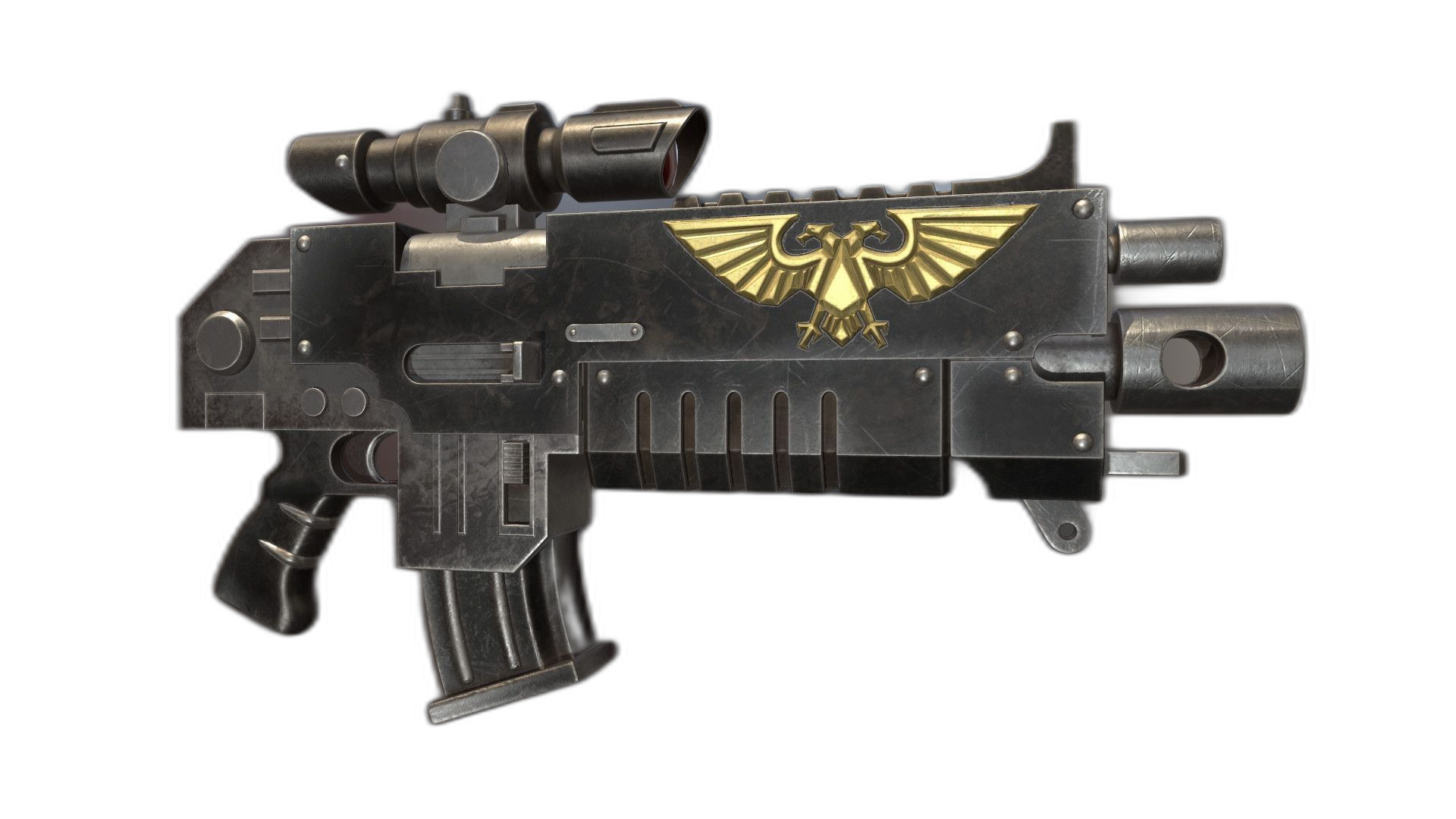
Crew-served support weapon of devastating firepower. Belt-fed, mass-reactive rounds deliver sustained suppressive fire capable of cutting through infantry formations and light armour alike.
Tap a zone on the blade to explore
All heavy-weapon sections (linear view)
Thunder of the Emperor's Wrath
Heavy weapons represent the Imperium's answer to the most formidable threats facing humanity, devastating instruments of war capable of destroying armored vehicles, fortifications, and massed infantry formations with equal efficiency in service to the Emperor. These crew-served and support weapons provide the firepower necessary to break enemy strongpoints that individual warriors cannot overcome, their sustained bombardment clearing paths through defenses that would otherwise prove impenetrable. From the steady thunder of heavy bolters to the searing beams of lascannons, heavy weapons define the sound of Imperial warfare at its most destructive, announcing the Emperor's judgment upon those who dare oppose humanity's dominion. The warriors who crew these weapons bear tremendous responsibility, for their fire often determines the outcome of engagements that shape the fate of entire worlds. The development of heavy weapons stretches back to the Dark Age Technology, when humanity's mastery of energy projection and explosive ordnance created weapons capable of challenging any foe. During that golden era, heavy weapons served as the backbone of planetary defense networks and conquest fleets, their patterns refined through millennia of technological advancement that produced designs the Adeptus Mechanicus now preserves through sacred ritual. The Standard Template Construct databases that survived the Age Strife contained blueprints for weapons ranging from simple crew-served stubbers to sophisticated energy weapons capable of piercing starship armor. These patterns now form the foundation of Imperial heavy weapon production, their designs considered sacred by Tech Priests who would never dream of modifying configurations blessed by the Omnissiah. The Adeptus Astartes deploy heavy weapons as integral elements of their tactical formations, Devastator squads providing the sustained firepower that enables assault elements to close with enemies. Space Marine heavy weapons represent scaled-up versions of standard patterns, their increased size and power suited to transhuman warriors whose enhanced physiology allows them to fire weapons that would require crews of normal humans to operate. These blessed instruments serve the Chapters throughout campaigns lasting centuries, their machine spirits growing attuned to the warriors who depend upon them for fire support. Veterans who specialize in heavy weapons develop profound bonds with their armaments, understanding that the rate at which their missiles fly and their bolts strike determines how many of their brothers survive each engagement. The Astra Militarum relies upon heavy weapons to an even greater degree than the Adeptus Astartes, for baseline humans lack the superhuman capabilities that allow Space Marines to advance under fire that would annihilate unprotected formations. Heavy weapon teams provide the firepower that compensates for individual Guardsmen's limitations, their sustained fire suppressing enemies while infantry advances toward objectives. The humble heavy bolter team or autocannon crew may lack the glory associated with charging assault troops, yet their patient dedication to providing accurate supporting fire saves countless Imperial lives in every engagement. Commissars understand that maintaining heavy weapon crews' morale and effectiveness often proves more tactically valuable than inspiring heroic charges. The Horus Heresy demonstrated both the power and the vulnerability of heavy weapons, as support crews found themselves targeted by precision strikes designed to eliminate the firepower that made Imperial forces so devastating. Brother slew brother while heavy weapons that should have been turned against xenos and rebels instead swept through loyalist ranks with devastating effect. The Traitor Legions understood that neutralizing heavy weapon positions often proved more valuable than eliminating equivalent numbers of line infantry, for a single lascannon could destroy vehicles that otherwise would have slaughtered dozens of attackers. This bitter lesson reshaped Imperial tactical doctrine, with heavy weapons receiving increased protection and concealment in recognition of their critical importance. Modern Forge Worlds across the Imperium continue producing heavy weapons in patterns that have remained essentially unchanged since before the Horus Heresy, their sacred designs proven through ten millennia of continuous warfare. Each weapon undergoes blessing ceremonies that awaken its machine spirit and dedicate it to the Emperor's service, rituals that may last days for particularly significant armaments. The result is weapons that function reliably across the most hostile environments, their blessed construction resistant to the environmental extremes and battle damage that would render lesser armaments inoperable. Heavy weapons remain the thunder of Imperial warfare, the sound of the Emperor's wrath made manifest through explosive ordnance and concentrated energy beams that destroy all who oppose humanity's rightful dominion.From Great Crusade to Era Indomitus
The history of Imperial heavy weapons begins with the Emperor's unification of Terra, when the master of mankind equipped His Thunder Warriors with weapons capable of breaking the fortified strongholds of techno-barbarian warlords. These early heavy weapons were crude by later standards, salvaged or reverse-engineered from surviving technology that had endured the Age Strife in varying states of repair. Yet even these primitive armaments demonstrated the principle that would define Imperial warfare—overwhelming firepower concentrated to destroy any obstacle blocking humanity's path to dominion. When the Emperor created the Legiones Astartes, He ensured that proper heavy weapon training and equipment would make His Space Marines capable of reducing any fortification and defeating any enemy armored force. The Great Crusade saw heavy weapons prove their worth across a million battlefields as the twenty Legions reunited humanity's scattered colonies under the Emperor's banner. Forge Worlds newly brought into compliance provided manufacturing capacity for heavy weapons production on a scale that had not been seen since before the Age Strife, their sacred foundries producing lascannons, heavy bolters, and missile launchers in quantities sufficient to arm the expanding expeditionary fleets. The Adeptus Mechanicus standardized heavy weapon patterns during this era, ensuring that weapons produced on one forge-world could utilize ammunition and parts manufactured on another. This logistical achievement enabled the Great Crusade to sustain combat operations across the galaxy without weapons becoming useless when their original supply chains were severed. The tragedy of the Horus Heresy transformed heavy weapons into instruments of civil war, as the firepower that had conquered the galaxy for the Emperor was turned against His loyal servants. At the Dropsite Massacre of Isstvan V, heavy weapon positions that should have provided covering fire for retreating loyalists instead annihilated them in crossfire that left no escape. The Siege of Terra itself saw heavy weapons deployed in such concentrations that entire sectors of the Imperial Palace were reduced to rubble, the thunder of bombardment continuing for months as traitors and loyalists contested every fortification. The Chaos Space Marines who fled into the Eye Of Terror carried corrupted heavy weapons with them, these once-blessed instruments now dedicated to the destruction of everything they had been created to protect. The reorganization following the Horus Heresy established strict protocols for heavy weapon distribution and tactical deployment, the Codex Astartes codifying doctrines that emphasized concentrated firepower supporting mobile elements. Chapter Armories became repositories of heavy weapons whose history often extended back to the Legions, these ancient instruments carrying machine spirits strengthened through millennia of battle and veneration. Successor Chapters inherited heavy weapon traditions from their parent Legions, developing tactical approaches that honored their heritage while adapting to the realities of their reduced numbers. The understanding that Chapters could no longer absorb casualties as the Legions had made heavy weapons even more critical, as their firepower helped preserve the irreplaceable lives of battle-brothers. The millennia since have seen continuous refinement of heavy weapon deployment doctrine without significant changes to the weapons themselves, for the Adeptus Mechanicus considers the sacred patterns established before the Horus Heresy to be inviolable. New threat types have required adaptation of tactics rather than technology, with crews learning to engage Tyranid bio-horrors and Necron constructs using weapons designed for entirely different enemies. The opening of the Great Rift and the Era Indomitus have placed unprecedented demands on heavy weapon production, as the Imperium fights for survival on more fronts than ever before. Belisarius Cawl's work on Primaris Marines included development of new heavy weapon systems like the hellblasters and plasma incinerators, designs that sparked controversy yet proved their worth against the endless enemies threatening humanity's existence. The future of Imperial heavy weapons rests upon the foundation established by the Emperor Himself, sacred patterns that will continue serving the Imperium as long as humanity endures. Whatever challenges arise, heavy weapon crews will answer with the thunder of their fire, the concentrated fury of their bombardment breaking enemy formations and clearing paths for advancing forces. The machine spirits inhabiting these blessed weapons have witnessed ten millennia of warfare and will witness ten thousand more, their service to the Emperor eternal and their devotion to humanity's survival absolute. Heavy weapons are and will always be the thunder that announces Imperial judgment, the sound of overwhelming force that no enemy can withstand.Heavy Bolters and Autocannons
The heavy bolter represents the most widespread heavy weapon in Imperial service, combining the devastating mass-reactive ammunition of standard Bolters with belt-fed mechanisms capable of sustained automatic fire that can shred infantry formations and light vehicles with equal efficiency. These weapons fire larger caliber rounds than their smaller counterparts, the increased explosive payload creating larger kill zones while maintaining the armor-penetrating capabilities that make bolt weaponry so feared across the galaxy. Heavy bolter crews develop intimate understanding of their weapons' capabilities, knowing exactly how to adjust their fire to account for thermal buildup and belt feed irregularities that could otherwise cause jams at critical moments. The steady roar of a properly maintained heavy bolter announces the Emperor's wrath to all enemies within its considerable effective range. Standard heavy bolters mounted on tripods require crews of two to three humans for effective operation, with one gunner operating the weapon while loaders manage ammunition belts and provide security. The Adeptus Astartes employ heavy bolters in configurations that allow single Space Marines to fire them from the hip or mounted positions, their enhanced strength managing the substantial recoil that would be impossible for baseline humans. Devastator squads provide sustained heavy bolter fire that can suppress enemy positions indefinitely, their blessed ammunition creating kill zones through which no enemy can advance without suffering catastrophic casualties. Vehicle-mounted heavy bolters provide mobile firepower for transport craft and main battle tanks, their presence ensuring that Imperial armor remains dangerous even when main weapons cannot engage. Autocannons trade the explosive complexity of bolt ammunition for larger caliber solid rounds fired at velocities that allow them to penetrate medium vehicle armor and fortification walls that would resist smaller weapons. These weapons trace their origins to the earliest days of technological civilization, their simple operating principles making them reliable across environments that would disable more sophisticated armaments. Astra Militarum heavy weapon teams favor autocannons for their versatility, the weapons effective against both infantry formations and light armored vehicles without requiring the specialized ammunition that limits heavy bolter deployment. The rhythmic thunder of autocannon fire provides a distinctive soundtrack to Imperial defensive operations, the weapons' sustained output creating barriers of steel that few enemies can penetrate. The Adeptus Mechanicus produces autocannons in patterns that balance fire rate, accuracy, and barrel longevity, each forge-world developing subtle variations that make their products distinctive. Ryza-pattern autocannons favor higher rates of fire that consume barrels more quickly but provide superior suppressive capability, while Metalican variants prioritize accuracy and range at the cost of sustained fire duration. Chapter Armories maintain autocannons alongside more sophisticated weapons, understanding that the simple reliability of these armaments makes them invaluable when more complex systems fail. The machine spirits inhabiting autocannons may lack the sophistication of those dwelling in lascannons or missile launchers, yet they serve the Emperor with dedication that knows no bounds. Assault cannons represent the pinnacle of projectile-based heavy weapons, their rotary barrel assemblies unleashing storms of fire that can shred anything short of main battle tank armor. These weapons generate tremendous heat and consume ammunition at rates that strain logistics, yet their effectiveness against massed infantry and light vehicles makes them essential for breakthrough operations. Adeptus Astartes Terminators favor assault cannons for exactly this devastating capability, their armored warriors advancing through suppressive fire that would annihilate unprotected forces. The distinctive whine of assault cannon barrels spinning up to firing speed has become a sound of doom for countless enemies of the Imperium, announcing destruction from which there is no escape. Production of heavy bolters and autocannons continues across Forge Worlds throughout the Imperium, their relatively simple construction making them ideal for mass production that supplies the endless demands of the Astra Militarum. Every heavy weapon that leaves a forge undergoes blessing ceremonies appropriate to its intended recipient, from brief prayers for weapons destined for common Guardsmen to elaborate rituals for armaments allocated to Adeptus Astartes Chapters. The result is weapons that serve faithfully through decades of continuous deployment, their machine spirits attuned to the warriors who depend upon them for survival. Heavy bolters and autocannons remain the backbone of Imperial fire support, their thunder echoing across battlefields that stretch from one end of the galaxy to the other.Lascannons and Energy Weapons
The lascannon stands as the premier anti-armor weapon in the Imperial arsenal, its concentrated energy beam capable of penetrating the thickest vehicle armor and reducing fortification walls to molten slag with single shots. These weapons represent the most sophisticated widespread energy technology available to Imperial forces, their focusing arrays and power systems maintaining effectiveness across engagement ranges that would render projectile weapons inaccurate. Lascannon crews understand that their weapons serve primarily as tank hunters and bunker busters, their fire reserved for targets worthy of the substantial power consumption each shot requires. The distinctive crack of a lascannon discharge and the momentary brilliance of its beam have announced the destruction of countless armored threats throughout the Imperium's long history. The technology underlying lascannons dates to the Dark Age Technology, when humanity's mastery of directed energy produced weapons capable of challenging any threat. The Adeptus Mechanicus preserves these sacred patterns through rituals that combine technical maintenance with religious observance, for lascannons are considered among the most blessed weapons in Imperial service. Each shot requires substantial power draw that limits sustained fire capability, yet the devastating effectiveness of each beam against armored targets makes lascannons essential for any force expecting to engage enemy vehicles or fortifications. The machine spirits inhabiting lascannons are considered particularly sophisticated, their responses to proper veneration reflecting the advanced technology that makes these weapons so effective. Multi-lasers combine multiple Las Weapons barrels into single mounts capable of sustained fire that can threaten light vehicles and heavy infantry, their output serving roles between standard lasguns and dedicated anti-armor lascannons. These weapons appear frequently on Imperial vehicles and defensive installations, their relatively modest power requirements allowing continuous operation that crew-served lascannons cannot match. The Astra Militarum favors multi-lasers for their versatility, the weapons providing fire support effective against most common threats while reserving lascannons for the most heavily armored enemies. The sustained beam of a multi-laser sweeping across infantry positions leaves burning wounds that no armor short of power plate can resist. Plasma Weapons in heavy configurations provide devastating anti-armor and anti-heavy infantry capability, their superheated bolts melting through protection that would resist solid projectiles and energy beams alike. Heavy plasma guns combine the armor-penetrating power of lascannons with the area effect damage of explosive ordnance, their shots creating localized thermal destruction that can eliminate entire squads of elite troops with single impacts. The volatile nature of plasma technology makes these weapons dangerous to their operators when overheated, yet their effectiveness against the most heavily armored targets makes the risk acceptable. Crews who specialize in plasma weapons learn to read the warning signs of containment failure, understanding when to allow cooling cycles and when tactical necessity demands pushing their weapons beyond safe operational parameters. Melta Weapons in heavy configurations provide the ultimate anti-armor capability at close range, their focused thermal beams capable of reducing the most heavily armored vehicles to molten metal in seconds. Multi-meltas combine the devastating power of standard meltaguns with increased range and output, creating weapons that can threaten super-heavy vehicles and fortification walls that would resist other armaments. The Adeptus Astartes deploy multi-meltas when expecting to engage the most heavily armored enemies, these weapons serving as insurance against threats that lighter armaments cannot address. The intense heat generated by melta discharge requires careful positioning to avoid friendly casualties, yet the destruction these weapons deliver makes them irreplaceable when facing heavily armored opposition. Energy weapon production remains concentrated on the most capable Forge Worlds, their sophisticated construction requiring expertise that less advanced manufactorums cannot provide. Each lascannon and multi-melta that leaves a forge undergoes extensive testing and blessing, for these weapons' complexity makes proper calibration essential to reliable function. The Adeptus Mechanicus guards energy weapon patterns with particular jealousy, understanding that these technologies represent some of the most advanced artifacts of the Dark Age Technology that humanity has preserved. Energy weapons serve as the Imperium's answer to any armored threat, their beams delivering judgment against enemies that projectile weapons cannot effectively engage.Missile Launchers and Explosive Ordnance
Missile launchers provide unmatched tactical flexibility among heavy weapons, their ability to fire different warhead types allowing single weapons to engage targets ranging from massed infantry to heavy vehicles depending on ammunition selection. Standard Imperial missile launchers accept frag missiles for anti-personnel work and krak missiles for anti-armor engagements, this versatility making them essential components of any balanced force. The Adeptus Astartes deploy missile launchers throughout their tactical formations, Devastator squads often including multiple launchers to ensure capability against any threat type. The distinctive whoosh of missile launch followed by distant explosions announces the Emperor's judgment delivered across distances that other heavy weapons cannot effectively engage. Krak missiles concentrate their explosive force into armor-penetrating configurations, their shaped charge warheads capable of defeating vehicle armor that would resist direct fire from lighter weapons. These missiles serve as the primary anti-tank capability for forces lacking dedicated lascannons, their portability allowing deployment in situations where heavier weapons cannot be positioned. Astra Militarum heavy weapon teams favor krak missiles for their effectiveness against the armored threats that Guard infantry cannot otherwise engage, each successful penetration potentially saving dozens of comrades from vehicle-mounted weapons. The mathematics of krak missile employment—one missile, one target—make ammunition conservation essential, as crews learn to wait for optimal firing solutions rather than wasting precious ordnance. Frag missiles spread their explosive force across wide areas, the fragmenting warheads creating kill zones effective against infantry formations and light vehicles. These missiles prove particularly devastating against densely packed enemy forces, their detonations sweeping through ranks with lethal shrapnel that no infantry armor can completely resist. Tactical situations determine whether frag or krak missiles best serve the Emperor's needs, experienced gunners switching between warhead types based on rapidly changing battlefield conditions. The flexibility provided by this capability makes missile launchers invaluable for defensive operations where the nature of attacking forces cannot be predicted in advance. Specialized missile types extend launcher capability beyond standard anti-personnel and anti-armor roles, their development addressing specific tactical challenges that conventional warheads cannot effectively meet. Flakk missiles provide air defense capability, their proximity-fused warheads creating shrapnel clouds that threaten low-flying aircraft and jump-equipped troops. Hunter-killer missiles incorporate sophisticated targeting systems that allow engagement of targets beyond visual range, their autonomous guidance pursuing enemies that direct-fire weapons cannot reach. The Adeptus Mechanicus continues developing new missile types to address emerging threats, each pattern undergoing extensive blessing before approval for general deployment. The cyclone missile launcher represents the ultimate expression of missile technology in infantry service, its paired racks allowing rapid salvos that can devastate enemy formations with overwhelming firepower. Adeptus Astartes Terminators favor cyclone launchers for their combination of sustained fire capability with the heavy armor protection that allows advancing under conditions that would destroy lighter troops. These weapons fire both krak and frag missiles in patterns that maximize destruction while conserving ammunition for extended engagements. The sight of Terminator squads advancing with cyclone launchers blazing has broken enemy morale before missiles even found targets, the display of overwhelming force convincing survivors that resistance serves no purpose. Production of missile launchers and their ammunition continues across Forge Worlds throughout the Imperium, the relatively standardized nature of these weapons allowing distributed manufacturing that supplies forces across the galaxy. Each launcher undergoes blessing ceremonies that awaken its targeting spirits and dedicate its function to the Emperor's service, while ammunition receives separate consecration ensuring that every warhead carries divine wrath to its target. The flexibility provided by missile systems makes them irreplaceable components of Imperial heavy weapon doctrine, their presence ensuring that no enemy type can count itself safe from the devastating judgment that Imperial forces deliver through explosive ordnance.Crew Training and Sacred Duty
Heavy weapon crews throughout the Imperium undergo specialized training that transforms them from common soldiers into dedicated instruments of the Emperor's overwhelming wrath, their expertise essential to maximizing the devastating potential of their assigned weapons. Astra Militarum heavy weapon specialists spend months learning to operate, maintain, and repair the weapons under their care, developing bonds with their armaments' machine spirits through the sacred rituals taught by attached Tech Priests. This training emphasizes not only technical proficiency but spiritual dedication, for heavy weapons crews must understand that their weapons serve as channels for divine judgment against the enemies of humanity. The graduates of heavy weapon training programs emerge as elite soldiers whose skills may determine the outcome of entire campaigns. The bond between heavy weapon crews and their assigned armaments develops through shared hardship and continuous maintenance that attunes machine spirits to their operators' needs. Senior crews speak of weapons that seem to function more smoothly for trusted operators, their machine spirits responding to the faith and dedication demonstrated through proper veneration. This relationship requires constant nurturing through maintenance rituals that combine technical adjustment with prayer, the crew understanding that neglecting either aspect risks weapon malfunction at the worst possible moment. The most experienced heavy weapon crews develop almost supernatural understanding of their weapons' capabilities, knowing exactly when to push for maximum output and when to allow cooling cycles that prevent damage. Adeptus Astartes heavy weapon specialists receive training that builds upon their transhuman capabilities, learning to employ weapons in ways that baseline humans cannot replicate. Devastator Marines spend decades perfecting their skills before advancing to veteran status, their enhanced senses and reflexes allowing them to engage targets at ranges and speeds impossible for mortal crews. The connection between a Space Marine and his heavy weapon spans centuries of shared battle, the weapon's machine spirit becoming an extension of the warrior's consciousness through bonds forged in endless combat. Chapter traditions govern which warriors receive heavy weapon assignments, for these roles carry honor and responsibility that not all battle-brothers prove worthy to bear. The tactical employment of heavy weapons requires understanding that these systems serve best in defensive positions or prepared firing points, their effectiveness maximized when crews have time to establish optimal fields of fire. Advancing with heavy weapons requires careful coordination that ensures crews can deploy rapidly while assault elements provide security, the vulnerability of setup procedures demanding protection during this critical period. Experienced commanders understand that heavy weapon placement often determines battle outcomes, their positioning decisions reflecting tactical acumen developed through years of studying the sacred doctrines established by the Codex Astartes and millennia of accumulated combat experience. The sacrifice demanded of heavy weapon crews reflects their critical importance to Imperial warfare, for enemies understand that eliminating these positions often proves more valuable than killing equivalent numbers of line infantry. Heavy weapon teams accept this danger as their sacred duty, understanding that their willingness to hold exposed positions under fire allows their comrades to advance against enemies who would otherwise prove overwhelming. The casualties suffered by heavy weapon crews throughout Imperial history demonstrate their dedication to service, each crew that falls replaced by another that accepts the same sacred burden. This tradition of sacrifice has persisted since the Great Crusade, when heavy weapon teams held positions against impossible odds to allow other forces to accomplish their missions. The spiritual dimension of heavy weapon service extends beyond individual dedication to encompass the theological understanding that these weapons serve as instruments of the Emperor's judgment. Chaplains bless heavy weapon crews before major engagements, their prayers invoking divine favor upon warriors whose fire will deliver holy destruction to the enemies of humanity. The Adeptus Mechanicus provides ongoing spiritual support through attached Tech Priests who ensure that weapon machine spirits remain properly venerated and maintained. This combination of tactical training, technical expertise, and spiritual dedication produces heavy weapon crews capable of delivering the Emperor's wrath with accuracy and devotion that no enemy can withstand.